
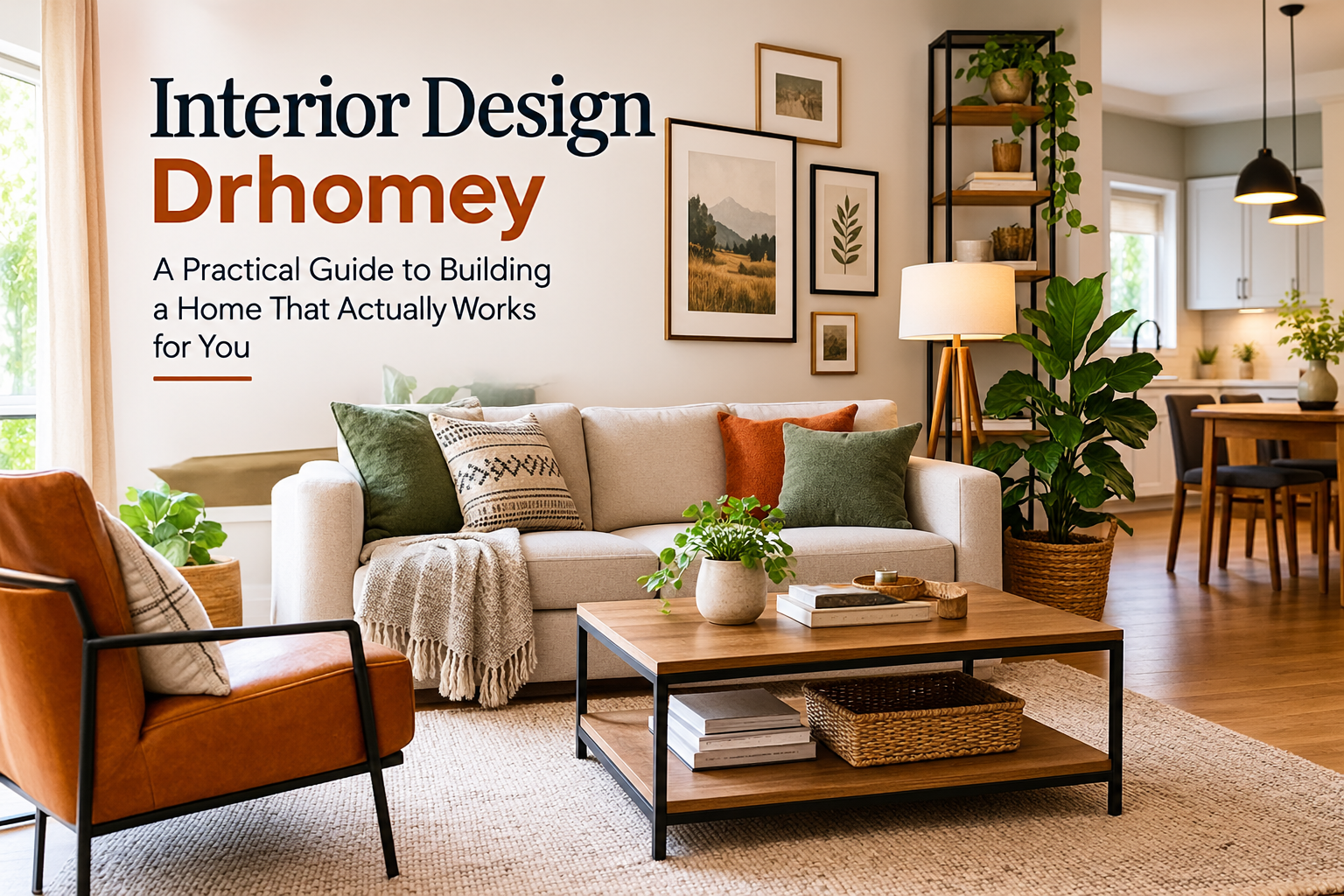
Most people don’t redo their whole house at once. They fix one room, live with it for a while, get annoyed by something that isn’t working, and move on to the next fix. That’s really the spirit behind interior design Drhomey — it’s less about chasing a specific look and more about a way of thinking through your space: what it needs to do, how it should feel, and how to get there without blowing your budget or your sanity.
If you’ve come across the term and aren’t quite sure what separates it from any other design advice you’ve read, here’s the short version: it’s a function-first, comfort-focused approach to decorating that treats a home as something you live in every day, not something you’re staging for a photo. This guide walks through what that means in practice, room by room, with the kind of detail you can actually use.
What Interior Design Drhomey Really Means
At its core, interior design Drhomey is built around three ideas that keep showing up no matter which room you’re working on:
- Function before decoration. Every piece in a room should earn its spot. If a chair looks nice but nobody ever sits in it, it’s taking up space that could be doing something more useful.
- Comfort you can live with daily. A home shouldn’t feel like a showroom you’re afraid to touch. Fabrics, layouts, and finishes are chosen with real use in mind — kids, pets, guests, spilled coffee, all of it.
- Small, deliberate changes over big overhauls. You don’t need to gut a room to improve it. Swapping lighting, rearranging furniture, or editing down what’s on display often changes a space more than a full renovation would.
This isn’t a rigid style like mid-century modern or farmhouse, where there’s a checklist of materials and colors you’re supposed to use. It’s closer to a mindset that can be applied to almost any aesthetic you already like.
The Core Principles That Guide Every Room
Define the Room’s Job Before You Decorate It
Before picking a single paint color, figure out what the room is actually for. A living room built for hosting big family gatherings needs different seating and traffic flow than one meant mainly for quiet evenings with a book. Skipping this step is why so many rooms end up looking fine in photos but feel awkward to actually use — the furniture was chosen before anyone thought about how people would move through the space.
The 60-30-10 Color Rule
This is one of the more reliable tools in any designer’s kit, and it holds up well here too:
- 60% dominant color — usually your walls, and sometimes large furniture pieces like a sofa.
- 30% secondary color — curtains, an area rug, an accent chair, bedding.
- 10% accent color — throw pillows, artwork, small decor pieces, a vase.
Following roughly this ratio keeps a room from feeling either flat and boring or visually chaotic. It gives your eye a clear place to land while still leaving room for personality.
Layered Lighting, Not Just One Overhead Fixture
A single ceiling light does one job: it makes a room bright. It doesn’t do anything for mood, and it tends to flatten a space rather than flatter it. A better setup layers three types of light:
- Ambient lighting — general overhead light that fills the room.
- Task lighting — focused light for reading, cooking, or working, like a desk lamp or under-cabinet kitchen lights.
- Accent lighting — smaller lights that highlight a feature, such as a lamp beside artwork or a dimmable strip behind a TV.
Even in a small apartment, adding one or two lamps to a room that only had an overhead light before makes a noticeable difference in how warm and finished the space feels in the evening.
Furniture That Works Harder
Multi-purpose furniture matters more in smaller homes, but it’s useful everywhere. Think ottomans with storage inside, a daybed that doubles as a guest bed, a console table that hides cables and mail clutter, or a dining table that extends for larger gatherings. The goal isn’t to cram every piece with a hidden function — it’s to make sure the furniture you do choose isn’t fighting against how you actually live.
Applying It Room by Room
Living Room
Start with the seating arrangement, not the sofa itself. Furniture pulled away from the walls and angled toward each other, even slightly, tends to create a more inviting conversation area than everything lined up against the perimeter. If the room feels awkward, it’s usually the layout, not the decor.
Keep surfaces mostly clear — a coffee table with a tray, a stack of books, and maybe one plant reads as intentional. The same table covered in remote controls, mail, and random odds and ends reads as cluttered, even if the individual items aren’t ugly.
Bedroom
The bedroom is one of the easiest rooms to overdo. Because it’s a rest space, it benefits from restraint more than almost any other room in the house. A few habits that make a real difference:
- Keep nightstands clear of anything except what you use before bed.
- Choose bedding in one or two calm colors rather than several competing patterns.
- Use warmer, dimmable lighting instead of bright overhead light in the evening.
- Store out-of-season clothes and clutter elsewhere so the room stays visually quiet.
Kitchen
Kitchens benefit enormously from function-first thinking because they’re used so often and so physically. Clear countertops make a kitchen look and feel bigger even if the square footage hasn’t changed. Vertical storage — cabinets that go to the ceiling, hooks for utensils, shelves above eye level for items you rarely use — frees up prime counter and cabinet space for what you use daily.
Good task lighting matters here more than almost anywhere else in the home. Under-cabinet lights over the counter make food prep genuinely easier, not just prettier.
Bathroom
Bathrooms respond well to small, targeted upgrades: a fresh coat of paint, updated hardware, better towels, or a new mirror can change the feel of the room without touching plumbing or tile. Storage matters too — baskets or drawer organizers keep counters clear, which makes even a small, dated bathroom feel cleaner and more put together.
Small Spaces and Studio Apartments
In tighter square footage, a few tricks do a lot of work:
- Light, neutral wall colors make rooms feel more open, though a bold accent wall can still work if the rest of the space stays calm.
- Mirrors reflect light and visually double a room’s depth.
- Furniture with visible legs rather than pieces that sit flush to the floor makes a room feel less boxed in.
- Rugs sized correctly — too small a rug makes a room look smaller, not bigger, so err on the larger side within reason.
Budgeting for a Drhomey-Style Refresh
One of the more practical aspects of this approach is that it scales to whatever budget you’re working with.
Low budget (a weekend and a few hundred dollars): Rearrange existing furniture, declutter surfaces, add a couple of lamps, swap out old throw pillows or curtains, and hang a few pieces of art you already own.
Mid-range budget: Add a statement piece like a new rug or accent chair, repaint one or two rooms, update light fixtures, and replace worn-out textiles like bedding or towels throughout the house.
Higher budget: Reupholster or replace major furniture, install built-in storage, update kitchen or bathroom fixtures, and bring in a mix of new lighting layers throughout the home.
The point isn’t the dollar amount — it’s applying the same principles (function first, layered light, intentional color, decluttered surfaces) at whatever scale fits your situation.
Common Mistakes Worth Avoiding
- Buying furniture before measuring the room. A sofa that looks reasonably sized in a showroom can dominate a smaller living room once it’s home.
- Matching everything too closely. A room where every piece of wood furniture is the exact same shade often feels flatter than one with some natural variation.
- Relying only on overhead lighting. It’s the single easiest fix mentioned in this guide, and also the most commonly skipped.
- Decorating before decluttering. Adding decor to a cluttered room rarely fixes the clutter — clearing space first usually matters more than what you add afterward.
- Ignoring scale. Tiny artwork on a large wall, or an oversized rug in a small room, throws off the proportions of a space even when the individual pieces are attractive.
Frequently Asked Questions
Is interior design Drhomey a specific decorating style, like farmhouse or minimalist? Not exactly. It’s better thought of as an approach or set of principles — function first, layered lighting, intentional color use, and comfort over show — that can be applied within almost any style you already prefer.
Do I need to hire a professional to apply these ideas? No. Most of what’s covered here — rearranging furniture, decluttering, adding lighting layers, following the 60-30-10 color rule — is something you can do yourself. A professional becomes more useful for structural changes, custom built-ins, or if you want help pulling together a cohesive plan across an entire home at once.
What’s the single change that makes the biggest visible difference? For most rooms, it’s decluttering surfaces combined with adding at least one extra light source beyond the overhead fixture. Both are low-cost and don’t require any special skills.
How do I keep a room from feeling too matchy or too chaotic? Stick close to the 60-30-10 color ratio, and allow some natural variation in materials like wood tones or metal finishes rather than trying to match them exactly.
Does this approach work for rentals where I can’t paint or renovate? Yes — arguably it works especially well for rentals, since so much of it relies on furniture arrangement, lighting, textiles, and decluttering rather than permanent changes.
Final Thoughts
None of this requires a big budget, a design degree, or a full renovation. What it does require is slowing down enough to think about how a room is actually used before deciding how it should look. Start with one room, apply a couple of these principles, live with the change for a week or two, and you’ll usually know right away whether it’s working. That’s the whole approach in practice — small, deliberate adjustments that add up to a home that feels as good to live in as it looks.
