
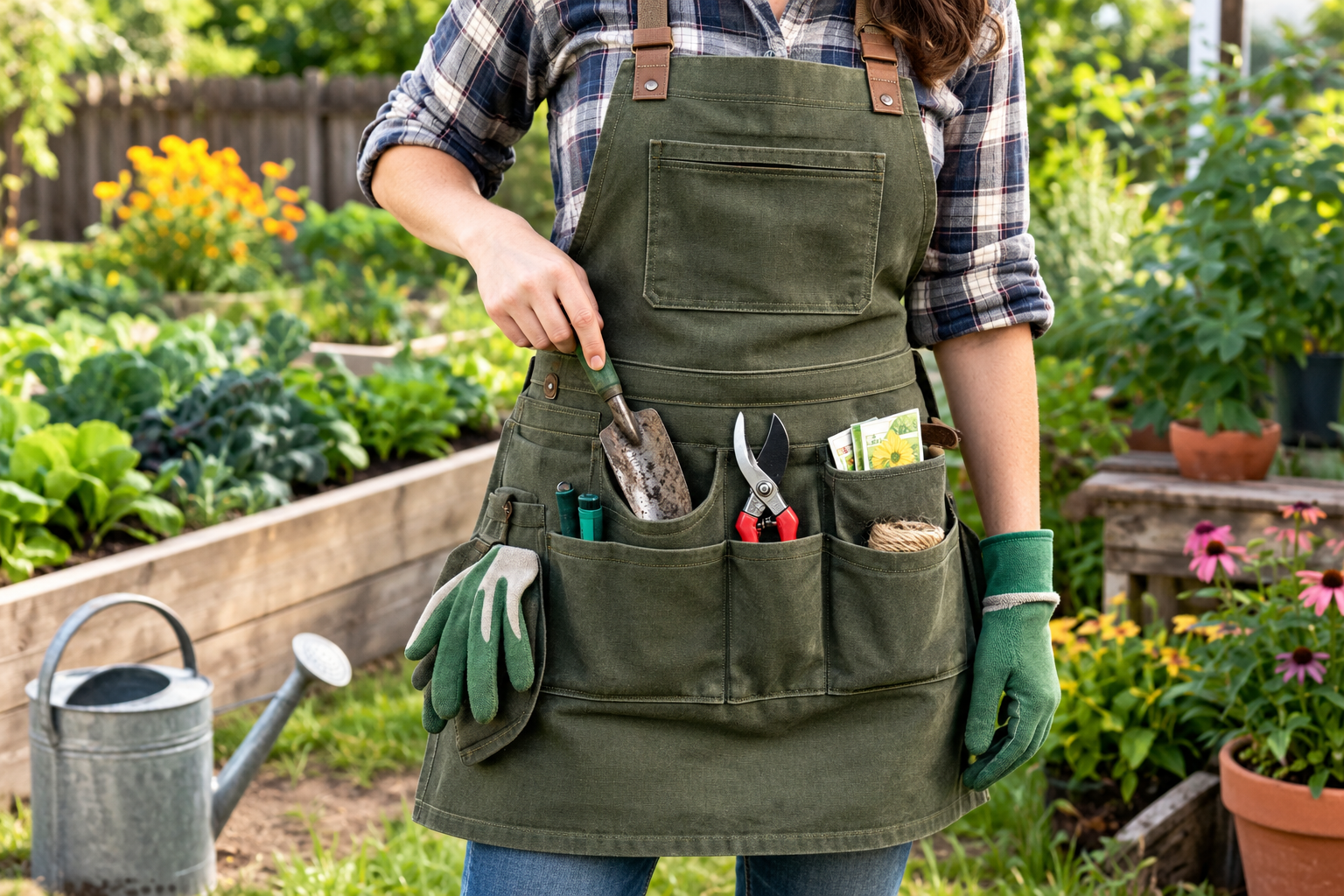
Anyone who spends real time in the garden knows that comfort and organization make all the difference between an enjoyable afternoon outdoors and a frustrating one. A good gardening apron1 solves both problems at once. It keeps your tools within reach, protects your clothing from dirt and moisture, and gives you a sense of order while you work through your planting, pruning, and weeding tasks. This guide walks through everything you need to know about this simple but surprisingly important piece of gardening gear.
What Exactly Is a Gardening Apron1
A gardening apron1 is a wearable piece of fabric, usually made from durable canvas, denim, or a water-resistant material, designed to be worn over regular clothes while working in the yard or garden. Unlike a kitchen apron, it typically includes several pockets and pouches built specifically to hold hand tools, seed packets, gloves, and small containers. Some versions even come with a built-in kneeling pad or a holster for pruning shears.
The idea behind this design is simple: gardening involves constant bending, kneeling, and reaching, and carrying tools loose in your hands or setting them down on the grass means you’re always walking back and forth or searching for a misplaced trowel. A well-designed apron eliminates that hassle by keeping everything organized in one place.
Why Gardeners Rely on This Simple Tool
Many people assume an apron is just a minor accessory, but experienced gardeners will tell you it quickly becomes one of the most used items in their toolkit. When you’re working in raised beds or tending to a vegetable patch, having quick access to a hand trowel, twine, or plant markers saves real time and effort.
Beyond convenience, there’s also a protective element. Garden soil often contains moisture, fertilizer residue, and small debris that can stain or wear down clothing. Wearing a sturdy gardening apron1 acts as a barrier, keeping your shirt and pants cleaner for longer. This is especially useful if you tend to move straight from gardening into other errands without changing clothes first.
There’s also a practical safety angle. Pockets designed to hold sharp tools like pruning shears or knives keep blades pointed safely away from the body, reducing the risk of accidental cuts compared to carrying them loosely in a pocket or setting them down where they could be stepped on.
Common Materials Used in Construction
The material of an apron affects how long it lasts and how comfortable it feels during extended use. Canvas is one of the most popular choices because it’s thick, breathable, and resistant to tearing. It holds its shape well even when loaded with heavier tools.
Denim is another favorite, prized for its rugged feel and classic look. It tends to soften over time with use, which some gardeners find more comfortable than stiff canvas. For gardeners who work in wetter climates or handle a lot of watering and irrigation, a water-resistant polyester or treated cotton blend can prevent dampness from soaking through to clothing underneath.
Leather versions also exist, offering excellent durability and a more rugged aesthetic, though they tend to be heavier and pricier than fabric alternatives. Choosing the right material really comes down to your climate, your budget, and how often you plan to use the apron throughout the year.
Key Features Worth Looking For
Not all aprons are built the same way, and knowing which features matter can help you choose one that actually improves your gardening routine rather than sitting unused in a closet.
Pocket layout is probably the most important factor. Look for a mix of pocket sizes, some large enough for a trowel or small pruning saw and others small enough for seed packets or plant tags. Adjustable straps are also worth prioritizing, since they allow the apron to fit comfortably regardless of body size or the thickness of layered clothing underneath.
Some aprons include a cross-back strap design instead of a simple neck loop, which distributes weight more evenly across the shoulders and reduces strain on the neck during long gardening sessions. This is a small detail that makes a noticeable difference if you spend hours outside.
A built-in kneeling pad is another feature that some gardeners find invaluable, particularly those who tend to raised beds or low-growing plants that require frequent kneeling. Rather than carrying a separate foam pad, the apron itself provides cushioning exactly when and where it’s needed.
Types of Aprons for Different Gardening Styles
Gardening styles vary widely, and the right apron often depends on what kind of work you do most. For general-purpose yard work, a classic bib-style apron with a chest pocket and waist pouches tends to work well for most tasks.
For gardeners who focus heavily on harvesting vegetables or fruit, a half-apron with a large front pouch is often preferred, since it can double as a temporary basket for holding freshly picked produce before it’s transferred to a proper container.
Those who spend a lot of time doing detailed pruning or floral work sometimes prefer a tool belt-style apron, which sits lower on the hips and keeps hands free for more delicate, two-handed tasks. Meanwhile, gardeners working in wetter or muddier conditions often lean toward waterproof designs that protect against soaked knees and damp soil contact.
How to Choose the Right Fit and Size
Sizing matters more than many people expect. An apron that’s too large will shift around and cause tools to swing awkwardly while bending over, while one that’s too tight can be uncomfortable and restrict movement. Most aprons come with adjustable neck straps and waist ties, so trying it on with the clothing you typically wear while gardening is the best way to judge fit.
Pocket depth is another consideration tied to sizing. If your tools tend to be on the larger side, look for an apron with deeper pockets so nothing slips out while you’re bending down to plant or weed. On the other hand, if you mostly carry small items like seed packets, twine, and plant labels, a more streamlined apron with several smaller compartments might serve you better than one built for bulky tools.
Caring for and Maintaining Your Apron
Like any piece of outdoor gear, a gardening apron1 benefits from regular care. Most fabric versions can be brushed off after use to remove loose soil, and occasional washing helps prevent buildup of dirt, plant residue, or fertilizer that can weaken the material over time.
Canvas and denim aprons typically hold up well to machine washing on a gentle cycle, though it’s worth checking any care label first, since some water-resistant coatings can degrade with repeated washing. Air drying is generally recommended over machine drying, as high heat can shrink fabric or damage stitching around the pockets.
Leather aprons require a different approach, usually involving spot cleaning with a damp cloth and occasional conditioning to prevent the material from drying out or cracking. Taking a few minutes to maintain your apron regularly will noticeably extend its usable life, especially if you use it several times a week during the growing season.
Practical Tips for Everyday Use
Getting the most out of a gardening apron1 often comes down to how you organize it. Assigning specific pockets to specific tools, rather than tossing items in wherever there’s space, makes it much faster to find what you need without having to stop and search mid-task.
It also helps to do a quick check before heading outside, making sure gloves, a trowel, pruning shears, and any small items like twine or plant tags are already loaded into their designated spots. This turns the apron into a grab-and-go system rather than something you have to reload every single time.
For gardeners working across a large yard or multiple garden beds, wearing the apron consistently rather than only occasionally helps build a habit of returning tools to their pockets instead of leaving them scattered around the yard, which is one of the most common ways garden tools get lost or damaged.
Final Thoughts on Choosing a Gardening Apron1
A well-chosen apron might seem like a small addition to your gardening setup, but it genuinely changes the way you work outdoors. It keeps tools organized, protects your clothing, and reduces the constant back-and-forth that comes from misplaced equipment. Whether you’re tending a small container garden on a balcony or managing several raised beds in a backyard, investing in the right one pays off in comfort and efficiency over time.
Taking the time to consider material, pocket layout, and fit will help ensure the apron you choose actually fits your gardening habits rather than sitting unused after the first few uses. With the right choice, this simple accessory can become one of the most relied-upon pieces of your entire gardening routine.
Frequently Asked Questions
Is a gardening apron really necessary, or just a convenience item?
It isn’t strictly necessary, but most gardeners who try one find it significantly improves efficiency and comfort, especially during longer sessions.
What material lasts the longest?
Canvas and treated denim tend to offer the best balance of durability and comfort, while leather lasts longest overall but comes at a higher cost.
Can it be used for tasks outside of gardening?
Yes, many people use theirs for other outdoor chores like woodworking, painting, or general yard maintenance where pocket storage is useful.
How many pockets should I look for?
This depends on personal preference, but a mix of two or three larger pockets and a few smaller ones usually covers most gardening needs without feeling bulky.
Want me to turn this into a downloadable file (Word doc or Markdown)?
