
If you’ve noticed chalky white residue on your faucets, dry skin after a shower, or dishes that never seem to come out spotless, hard water might be the culprit. Investing in a water softener system for home1 is one of the most practical upgrades a household can make, improving everything from the taste of your drinking water to the lifespan of your plumbing. This guide walks through everything you need to know before making that decision.
Understanding Hard Water and Why It Matters
Hard water contains high concentrations of dissolved minerals, primarily calcium and magnesium. These minerals aren’t harmful to drink, but they cause a surprising number of problems around the house. As water flows through pipes, appliances, and fixtures, it leaves behind mineral deposits that build up over time.
This buildup, often called limescale, can clog pipes, reduce water pressure, and shorten the life of water-using appliances like dishwashers, washing machines, and water heaters. Soap doesn’t lather well in hard water either, which means you end up using more detergent and shampoo just to get the same results you’d get with soft water.
The severity of hard water varies by region, depending largely on the geology of the local water source. Areas with limestone-rich soil tend to have significantly harder water than areas with softer bedrock. Testing your water is usually the first step toward understanding whether you need a solution at all.
How a Water Softener System for Home1 Works
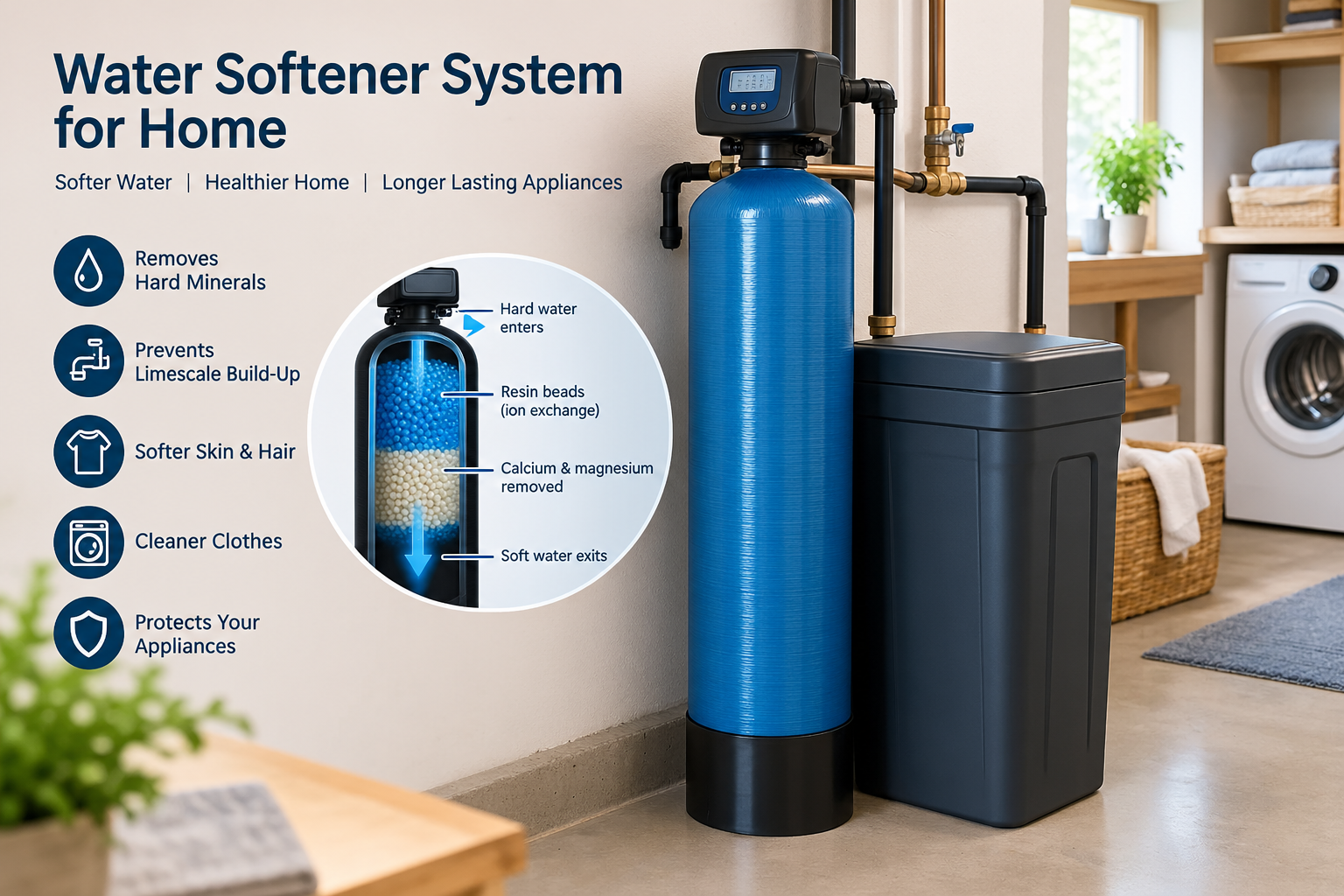
A water softener system for home1 operates on a fairly simple principle called ion exchange. Inside the unit is a tank filled with small resin beads that carry a negative charge. As hard water passes through this tank, the positively charged calcium and magnesium ions are attracted to the resin beads and swap places with sodium or potassium ions already attached to them.
The result is water that no longer carries the minerals responsible for scale buildup and soap scum. Over time, the resin beads become saturated with calcium and magnesium and need to be recharged. This happens through a process called regeneration, where a brine solution flushes the collected minerals out of the resin and replaces them with fresh sodium or potassium ions.
Most modern units handle this regeneration process automatically, either on a timer or based on actual water usage measured by a built-in meter. This means homeowners rarely need to think about the mechanics once the system is properly installed and configured.
Signs Your Home Needs a Water Softener
Not every home requires softened water, so it helps to recognize the warning signs before investing in equipment. Spots on glassware and dishes even after washing are one of the most common indicators. You might also notice a filmy residue on skin after bathing, or hair that feels dull and difficult to manage.
Reduced water pressure over time can point to mineral buildup narrowing the inside of your pipes. Appliances that seem to wear out faster than expected, along with water heaters that struggle to maintain efficiency, are also common symptoms of long-term hard water exposure.
If you’re on a municipal water supply, your provider may publish water hardness data that you can check directly. For homes relying on well water, a simple test kit or a professional water test can give you an accurate hardness reading, usually measured in grains per gallon.
Types of Water Softener Systems Available Today
There are several types of systems homeowners can choose from, each suited to different needs and budgets. Salt-based ion exchange systems remain the most common and effective option, particularly for households dealing with very hard water. They use the process described earlier and are known for delivering consistently soft water.
Salt-free water conditioners work differently. Instead of removing minerals, they alter their structure so they can’t cling to surfaces and form scale. These systems don’t technically “soften” water in the traditional sense, but they can still reduce many of the negative effects of hardness without adding sodium to your water supply.
Dual-tank systems are designed for larger households or homes with especially hard water, since they allow continuous softened water even during regeneration cycles. Magnetic and electronic descalers are another option, though their effectiveness tends to be more limited and results can vary depending on installation and water conditions.
Key Benefits of Installing a Water Softener System for Home1
Choosing a water softener system for home1 brings a range of noticeable improvements to daily life. Skin and hair often feel softer and less irritated, since soft water rinses more thoroughly and doesn’t leave mineral residue behind. Laundry tends to come out brighter and softer too, since detergents work more effectively in soft water.
Appliances benefit significantly as well. Water heaters, dishwashers, and washing machines all last longer and run more efficiently when they aren’t fighting against scale buildup inside their components. This can translate into real savings over the years, both in energy costs and in avoided repairs or early replacements.
Cleaning becomes noticeably easier too. Soap scum on shower doors, faucets, and sinks tends to disappear once hard minerals are no longer part of the equation. Many homeowners find they use less soap, shampoo, and cleaning product overall, which adds up to meaningful savings over time.
Choosing the Right Water Softener System for Home1
Selecting the right water softener system for home1 starts with understanding your household’s specific needs. Water hardness level, daily water usage, and the number of people in the home all play a role in determining the appropriate system size. A unit that’s too small will struggle to keep up, while an oversized system wastes salt and water during unnecessary regeneration cycles.
It’s also worth considering whether a salt-based or salt-free option makes more sense for your household. Families concerned about sodium intake, or those on septic systems, may lean toward salt-free conditioners or potassium chloride as an alternative to traditional salt.
Look for systems with demand-initiated regeneration rather than simple timers, since these tend to be more efficient and use less salt and water overall. Checking certifications from recognized water quality organizations can also help confirm that a system performs as advertised.
Installation Process Explained
Installing a water softener typically involves connecting the unit to your home’s main water line, usually near where the water enters the house. Professional installation is common, especially for households unfamiliar with plumbing work, though many systems are designed with homeowner installation in mind.
The process generally includes bypassing the outdoor water line, since softened water isn’t necessary for irrigation and can be wasteful for that purpose. Once installed, the system needs to be programmed with your local water hardness level so it regenerates at the appropriate intervals.
Choosing the right location matters too. The unit should be placed somewhere with easy access to a drain, a power outlet if needed, and enough space for salt or conditioner refills. A water softener system for home1 installed correctly from the start tends to perform more reliably and requires far less troubleshooting down the road.
Maintenance Tips to Keep Your System Running Smoothly
Regular maintenance keeps a softener performing at its best for years. Checking salt levels monthly and refilling as needed prevents the resin from losing its softening capacity. It’s also important to avoid letting the salt bridge or cake at the bottom of the tank, since this can interfere with proper regeneration.
Periodically cleaning the resin bed with a specialized cleaner helps remove iron or sediment buildup that can reduce efficiency over time. Most manufacturers recommend a resin bed cleaning once or twice a year, depending on water quality.
It’s also worth inspecting the brine tank and injector system occasionally to make sure nothing is clogged or malfunctioning. With reasonable care, a quality unit can last well over a decade before major components need replacement.
Cost Considerations
The cost of a water softening setup varies widely depending on size, technology, and installation complexity. Basic salt-based systems tend to be more affordable upfront, while salt-free conditioners and dual-tank units generally cost more. Installation fees add to the total, particularly if professional plumbing work is required.
Ongoing costs include salt or potassium chloride, water used during regeneration cycles, and occasional resin bed cleaner. While these expenses add up over time, many homeowners find they’re offset by savings on soap, detergent, and appliance repairs, along with the added comfort of consistently soft water throughout the home.
Environmental and Health Considerations
Some homeowners worry about the environmental impact of salt-based systems, particularly regarding wastewater discharge. Choosing a high-efficiency, demand-initiated system helps minimize water and salt waste compared to older timer-based models. Potassium chloride is a common alternative for those wanting to reduce sodium discharge into the environment.
From a health standpoint, softened water is safe for most people to drink, though those on strict sodium-restricted diets may want to consult a doctor or consider a separate drinking water tap connected before the softener. Overall, the health and comfort benefits tend to outweigh these minor considerations for the vast majority of households.
Frequently Asked Questions
Does a water softener remove all minerals from water?
No. It specifically targets calcium and magnesium, the minerals responsible for hardness, while leaving other beneficial minerals largely unaffected.
How long does a typical unit last?
With proper maintenance, most systems last between ten and fifteen years before major components need replacing.
Is softened water safe for plants and gardens?
Softened water isn’t ideal for plants due to its sodium content, which is why most installations bypass the outdoor water line.
Will installing a water softener increase my water bill?
Regeneration cycles do use some additional water, but efficient systems minimize this, and many households find the difference negligible compared to the benefits gained.
Can I install a system myself?
Many modern kits are designed for straightforward installation, though professional help is recommended for complex plumbing setups.
A well-chosen water softener system for home1 can transform daily routines, protect appliances, and make everyday tasks like cleaning and bathing noticeably more pleasant. With a bit of research into your home’s specific water hardness and household needs, finding the right fit is a manageable process that pays off for years to come.
Want this saved as a downloadable file (Word doc or Markdown)?
