
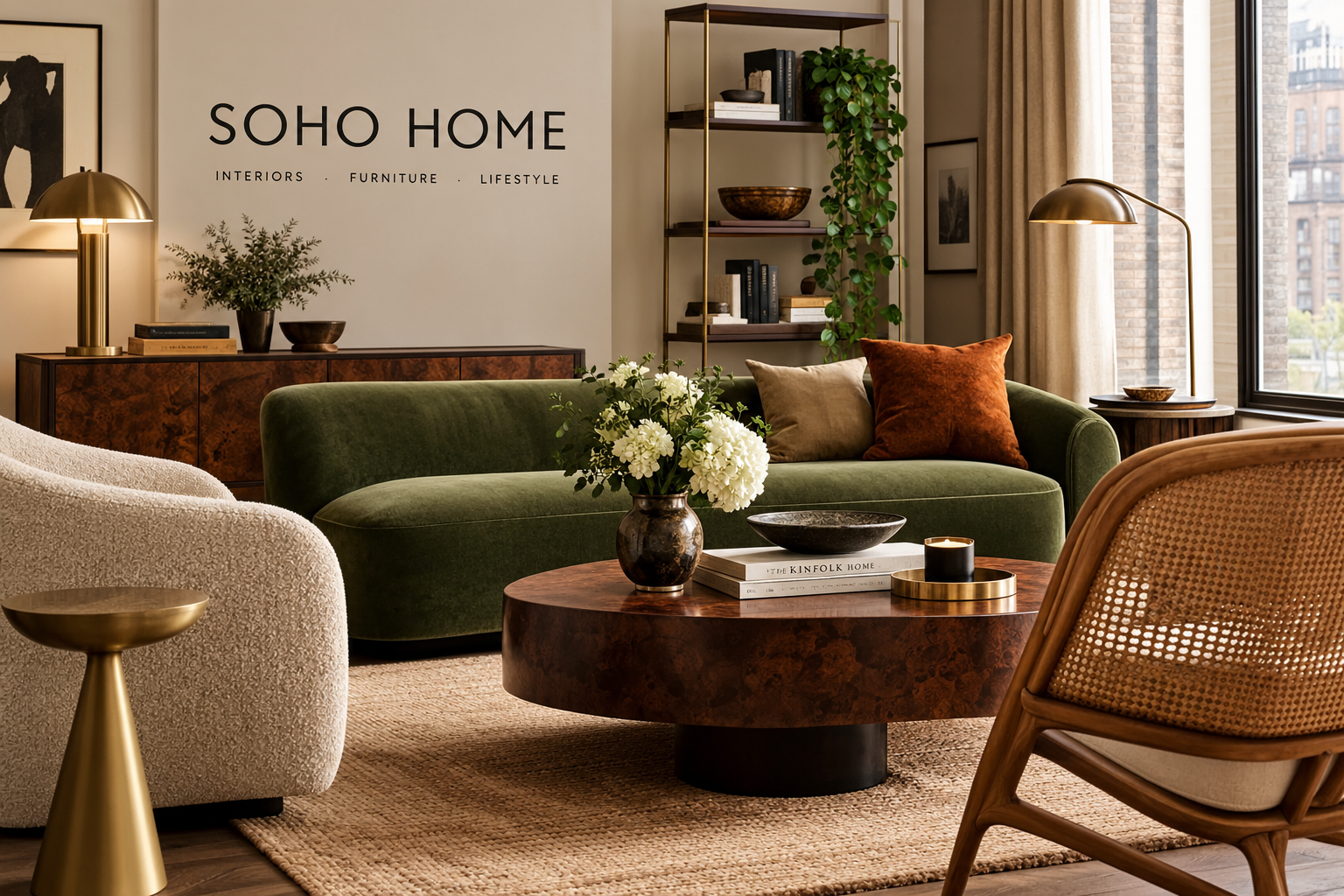
Soho Home1 has become one of the most talked-about names in the world of interior design, and for good reason. What started as a small collection of furnishings has grown into a full lifestyle brand that blends comfort, craftsmanship, and a distinct sense of character. If you have ever walked into a beautifully styled room and wondered where the furniture, lighting, or textiles came from, chances are it traces back to this label. This article takes a closer look at what makes Soho Home1 so appealing, where it came from, and why so many homeowners and designers keep returning to it.
What Is Soho Home1
At its core, Soho Home1 is an interiors collection built around the idea of relaxed, sociable living. It covers everything a home might need, from sofas and armchairs to lighting, tableware, textiles, and home fragrance. Rather than following fast-changing trends, the brand leans into timeless materials like velvet, rattan, brass, and burl wood, giving each piece a sense of warmth that feels lived-in rather than showroom-perfect.
The collection was created to mirror the atmosphere found inside a well-known network of private members’ clubs. Guests who spent time in these spaces often asked where they could buy the furniture, the glassware, or even the bathrobes they used during their stay. That curiosity eventually turned into a full retail brand, and the rest, as they say, became history.
The Origins and Growth of the Brand
The story behind Soho Home1 begins with a simple observation. People loved the atmosphere of the clubs they were visiting and wanted to recreate that same feeling at home. The brand launched with a crystal glassware collection back in 2016, a modest starting point that quickly expanded once demand became clear.
Over the following years, the range grew far beyond glassware. Furniture, lighting, rugs, cushions, mirrors, and tableware were added one category at a time, each designed in-house to keep a consistent look and feel across the entire collection. Today, the brand supports design choices across more than thirty locations worldwide, drawing inspiration from cities as varied as Austin, Mumbai, and Berlin.
What makes this growth interesting is that it was never rushed. Each new category was introduced only after the previous one had proven itself with customers, which explains why the overall aesthetic feels so cohesive rather than like a random assortment of products stitched together for the sake of expansion.
The Signature Design Style
Anyone familiar with Soho Home1 will recognize its design language almost instantly. The style sits somewhere between mid-century modern and Art Deco, favoring curved forms, pedestal bases, and a soft, layered look rather than anything sharp or minimalist. Materials play a huge role in this identity. Velvet and bouclé fabrics appear frequently on seating, while rattan and cane bring texture to headboards, chairs, and storage pieces.
Color palettes tend to stay muted and earthy, with greens, browns, and soft golds appearing across multiple collections. This restrained approach to color allows individual pieces to be mixed and matched easily, which is part of why the brand has such a loyal following among people who like to build their interiors gradually rather than buying an entire matching set at once.
Brass detailing and burr wood finishes add a quiet sense of luxury without feeling overly formal. The overall impression is comfortable, tactile, and a little nostalgic, as if each room has been furnished over time rather than purchased in a single afternoon.
Furniture and Product Categories
The furniture range under Soho Home1 is broad enough to furnish nearly every room in a home. Sofas and accent armchairs make up a large part of the lounge category, often available in a range of fabric and leather options. Coffee tables, side tables, and console units round out the living space offerings, giving buyers plenty of flexibility depending on room size and layout.
Bedrooms are equally well covered, with beds, mattresses, dressers, and wardrobes designed to match the same warm aesthetic found throughout the rest of the collection. Dining tables and chairs, sideboards, and media consoles extend the range into dining and entertaining spaces, while smaller items like stools, ottomans, and benches help fill in the gaps for more compact areas.
Beyond furniture, the brand also produces lighting fixtures, home fragrance, bedding, and decorative accessories. This breadth means a single customer could theoretically furnish an entire home using only pieces from Soho Home1, without needing to source items from multiple retailers to achieve a consistent look.
Inspiration Drawn From Real Spaces
One detail that sets Soho Home1 apart from many other interiors brands is that its collections are not designed in isolation. Instead, many product lines are directly inspired by specific locations within the wider club network. Interiors from a London location on The Strand, a club in Rome, and another in Nashville have all served as reference points for particular furniture collections.
This approach gives customers a way to buy into a very specific atmosphere rather than a generic style. Someone who loved the feel of a particular room during a visit can often find furniture pieces that were directly inspired by that exact space. It turns shopping into something closer to recreating a memory, which is a large part of the emotional appeal behind the brand.
Design Services and In-Person Experience
For customers who want more guidance, Soho Home1 offers a dedicated design service. This service connects buyers with interior style managers who help translate the look of a favorite location into a real living space. Rather than guessing which pieces work well together, customers can lean on professional input to make sure furniture, lighting, and accessories all complement each other.
Physical studios also play an important role in the brand experience. These spaces are intentionally not treated as simple retail stores. Visitors are encouraged to spend time in them, sit on the furniture, have a drink, and get a genuine feel for the materials before making a purchase decision. This hands-on approach reflects the same hospitality-driven philosophy found across the broader club network the brand grew out of.
Locations have expanded well beyond the original store in New York City’s Meatpacking District. A studio in London’s Notting Hill and another in West Hollywood on Melrose Avenue have since opened, each offering thousands of square feet of space dedicated to showcasing the collection in a lived-in, welcoming environment rather than a sterile showroom setting.
Who Soho Home1 Is Really For
A common misconception is that Soho Home1 is exclusively available to members of the associated private clubs. In reality, the collection is open to everyone. While members of the loyalty and travel program do receive certain perks, such as discounts on full-price purchases and free delivery on smaller items, membership is not a requirement to shop the range.
This accessibility has helped the brand build a much wider customer base than its origins might suggest. Interior designers, homeowners renovating a single room, and people furnishing an entire property from scratch have all found something useful within the collection. The price range varies significantly depending on the piece, which means the brand can appeal to both budget-conscious shoppers looking for a single statement item and those investing in a complete interior overhaul.
Buying Considerations and What to Expect
When shopping the collection, it helps to think about how pieces will work together rather than buying items in isolation. Because the design language leans heavily on texture and warm materials, mixing a velvet sofa with a rattan accent chair or a brass side table tends to work naturally within the established aesthetic.
Delivery timelines and measurements matter as well, particularly for larger furniture pieces like sofas and beds. Taking accurate room measurements before ordering helps avoid the disappointment of a piece that looks perfect online but doesn’t quite fit the intended space. Many buyers also find it useful to start with one or two anchor pieces, such as a sofa or dining table, and build the rest of the room around those choices over time.
Secondary markets have also emerged for those interested in the brand. Resale platforms occasionally list original pieces, sometimes authenticated and ready for faster delivery than a new order might allow. This has created an additional path for buyers who want the same design language without waiting through a full production and shipping cycle.
Why the Brand Continues to Resonate
The lasting appeal of Soho Home1 comes down to consistency and storytelling. Rather than chasing every passing trend, the brand has stayed committed to a specific aesthetic built around comfort, texture, and familiarity. That consistency makes it easy for customers to trust that a new purchase will fit seamlessly with pieces bought years earlier.
There is also something inherently appealing about buying into a story rather than just a product. Knowing that a particular armchair or lighting fixture was inspired by a real, specific room gives the purchase a sense of meaning that generic furniture often lacks. For many customers, that emotional connection is just as important as the physical quality of the materials themselves.
Frequently Asked Questions
Is Soho Home1 connected to a private members’ club?
Yes, the brand was created as the interiors arm of a well-known network of private clubs, though shopping the collection does not require any form of club membership.
Do I need to be a member to buy from Soho Home1?
No. The furniture, lighting, and accessories are available to the general public, with membership only offering additional perks like discounts rather than being a purchase requirement.
What materials are most common across the collection?
Velvet, bouclé, rattan, cane, brass, and burr wood appear frequently, giving the range its signature warm and textured look.
Can the design service help me plan an entire room?
Yes, style managers work directly with customers to recreate a specific look or atmosphere, making it easier to coordinate furniture, lighting, and accessories cohesively.
Where can I experience the products in person?
Physical studio locations allow visitors to see, touch, and sit on furniture before buying, offering a more immersive experience than browsing online alone.
