
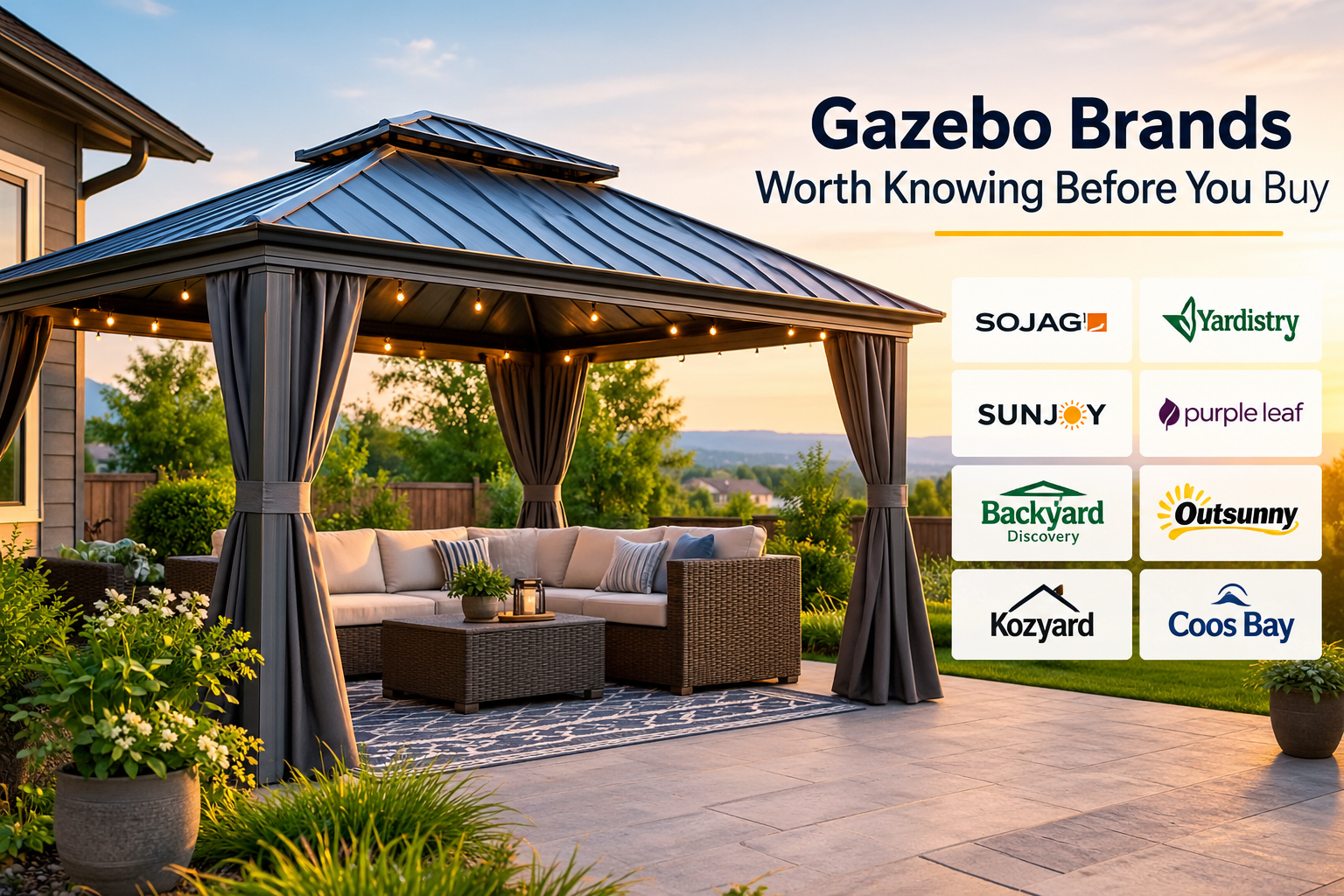
Shopping for a gazebo sounds simple until you start scrolling through listings and realize half a dozen brands are all claiming to make the “best” one. Some are genuinely built to last through a decade of winters. Others look nearly identical in photos but fall apart after one bad storm. The difference usually comes down to two things: the brand’s actual manufacturing standards and the frame material they build around.
This guide walks through the gazebo brands worth knowing, what separates a good one from a forgettable one, and how to match a brand to your yard, your climate, and your budget.
What Actually Separates One Gazebo Brand From Another
Before getting into specific names, it helps to know what you’re really comparing. Two gazebos can look nearly identical in a product photo and still perform completely differently in your backyard. The things that matter most are:
- Frame material – aluminum, steel, galvanized steel, or wood, each with different strength and maintenance profiles
- Roof type – soft-top canopy fabric versus a rigid hardtop (usually asphalt shingle, polycarbonate, or metal panel)
- Wind and snow ratings – how the structure is engineered to handle real weather, not just showroom conditions
- Hardware and joinery – whether panels bolt together with real fasteners or rely on thin snap-fit connectors
- Warranty and customer support – how the brand backs its product once it’s already in your yard
With that in mind, here’s how the major players stack up.
Top Gazebo Brands Worth Considering
Yardistry — Best for Traditional Wooden Gazebos
Yardistry has built its reputation on cedar construction, and it shows. Their gazebos use solid wood frames finished to resist rot and insects naturally, paired with rustproof aluminum roofing on many models. If you want the classic look of a garden gazebo — visible wood grain, a peaked roof, an old-world silhouette — Yardistry is usually the first name that comes up. Assembly tends to be more involved than with metal kits since the components are heavier, but the precut, predrilled pieces keep the process manageable for a determined DIYer. The tradeoff with any wood structure, Yardistry included, is that you’re committing to periodic staining or sealing to keep the frame from weathering.
Purple Leaf — Best for Premium Hardtop Structures
Purple Leaf has carved out a strong position in the hardtop category, particularly with aluminum-framed models that use galvanized steel or polycarbonate roofing. What tends to stand out with this brand is the attention to drainage systems and thicker structural posts, which matters more than people expect once heavy rain starts pooling on a flat roofline. Purple Leaf gazebos also tend to include privacy curtains and mesh netting as standard rather than an upsell, which is a nice touch if you’re planning to use the space for dining or entertaining. Expect to pay more than you would for a basic pop-up canopy, but the build quality generally reflects that price.
Sunjoy — Best All-Around Value
Sunjoy sits in a sweet spot between budget pop-up canopies and premium hardtop pavilions. The brand offers a wide range of styles, from soft-top gazebos with curtains to fully enclosed hardtop pavilions, and the general consensus among buyers is that Sunjoy delivers solid durability without the premium price tag of some competitors. This breadth makes Sunjoy a reasonable starting point if you’re not yet sure whether you want a wooden look, a metal frame, or something in between.
Backyard Discovery — Best for Feature-Rich, Livable Spaces
Backyard Discovery models, like the Arlington and Arcadia lines, lean into the idea of the gazebo as an actual outdoor room rather than just shade. Several models include electrical wiring built into the structure, which means outlets and light fixtures without running extension cords across the yard. The cedar construction is comparable to Yardistry’s in quality, and the layouts tend to favor larger footprints suited to hosting rather than a quiet reading nook.
Kozyard — Best Overall Balance of Durability and Features
Kozyard has gained attention for hardtop gazebos that combine steel and aluminum in the same structure — steel for the frame’s core strength, aluminum for the roof and trim to cut down on rust risk. Integrated gutter systems and included insect netting are common across the lineup, which addresses two of the most common complaints people have with cheaper hardtop models: water runoff soaking the seating area and bugs getting in through gaps.
Outsunny — Best Budget Soft-Top Option
If your priority is an affordable shade structure for a season or two rather than a permanent fixture, Outsunny is worth a look. The brand focuses on soft-top canopy gazebos with steel frames, and while they won’t compete with hardtop pavilions on long-term durability, they’re a reasonable entry point for someone who wants coverage for a patio table without a major investment.
Coos Bay — Best for Portable, Pop-Up Convenience
Coos Bay specializes in pop-up canopy gazebos designed for quick setup and takedown — useful for camping, tailgating, or anyone who doesn’t want a permanent backyard structure. These aren’t built for year-round exposure, but for occasional use they’re light, easy to transport, and quick to deploy without tools.
Aluminum, Steel, or Wood: Choosing the Right Material
Brand matters, but material is arguably the bigger decision, since it determines how the structure will actually hold up where you live.
Aluminum is the lightest of the common frame materials and naturally resistant to rust, which makes it a strong choice in humid or coastal climates where corrosion is the main enemy. It’s also easier to move or reposition if you’re not committing to a permanent footprint. The tradeoff is cost — aluminum gazebos tend to run more expensive than steel equivalents of similar size — and while it holds up fine in most conditions, it doesn’t match steel for raw strength in extreme wind.
Steel, particularly galvanized steel, is the material of choice if you live somewhere with real winters or frequent high winds. It’s significantly stronger than aluminum and, when properly galvanized or coated, resists rust well enough for long-term outdoor use. The downsides are weight (harder to install solo) and the fact that any scratches or chips in the coating need attention before rust has a chance to set in.
Wood, almost always cedar in quality gazebos, offers a look that metal simply can’t replicate. Cedar in particular contains natural oils that help resist insects and some moisture damage. But wood is still porous, and without regular sealing or staining, it can warp, crack, or shift with temperature swings over the years. It’s the material for people who value aesthetics and don’t mind the maintenance that comes with it.
| Material | Best For | Watch Out For |
|---|---|---|
| Aluminum | Coastal/humid climates, easy upkeep | Higher price, less raw strength than steel |
| Steel / Galvanized Steel | High wind, heavy snow, budget-conscious buyers | Weight, coating maintenance |
| Wood (Cedar) | Classic aesthetics, garden settings | Regular sealing/staining required |
Hardtop vs. Soft-Top: Which Roof Type Makes Sense
A gazebo’s roof style affects both its price and how it holds up over time. Soft-top gazebos use fabric canopies stretched over a metal frame, and they’re generally the most affordable and easiest to set up or take down. They’re a good fit for seasonal use or anyone renting rather than owning their outdoor space. The fabric itself will eventually need replacing, usually every few years depending on sun exposure.
Hardtop gazebos, built with polycarbonate panels, asphalt shingles, or metal roofing, are the better choice for a permanent, year-round structure. They handle rain, snow, and UV exposure far better than fabric, and many are rated to withstand real snow loads rather than just light drizzle. The upfront cost is higher, and the assembly is more involved, but they require far less ongoing upkeep once installed.
What to Check Before You Buy
A few practical questions will save you from a disappointing purchase regardless of which brand you’re considering:
- What’s the wind and snow rating, if any is listed? Not every brand publishes exact figures, but reputable ones will at least state that the structure has been tested against industry standards.
- Does it include drainage features? A gutter system or angled roofline prevents water from pooling and dripping directly onto whoever’s standing underneath.
- Is netting or curtain included, or sold separately? This affects both usability and the real price you’ll end up paying.
- How is it anchored? Ground stakes work for soft-top canopies, but permanent hardtop structures generally need concrete anchors or a paver base for real stability.
- What does the warranty actually cover? Frame defects and fabric defects are often covered under different terms, so it’s worth reading the specifics rather than assuming full coverage.
Frequently Asked Questions
Are more expensive gazebo brands actually worth the extra cost? Generally yes, if the extra cost is going toward better materials — thicker posts, galvanized coatings, integrated drainage — rather than just brand recognition. A budget soft-top gazebo and a premium hardtop pavilion are really two different products serving two different needs, so the “worth it” question depends on whether you want a seasonal shade structure or a permanent fixture.
Do I need a permit to install a gazebo? This depends entirely on your local jurisdiction and the size and permanence of the structure. Larger hardtop gazebos with concrete footings are more likely to require a permit than a portable soft-top canopy. It’s worth checking with your local building department before installation, especially if the structure will be anchored permanently.
Can I mount a ceiling fan or light fixture on a gazebo? On hardtop models with reinforced cross beams, yes, though it’s best to use a wet-rated fixture designed for outdoor use. Soft-top canopy structures generally aren’t built to support that kind of weight and shouldn’t have anything heavier than lightweight string lights attached to the frame.
Final Thoughts
There isn’t a single “best” gazebo brand for everyone, because the right choice depends heavily on your climate, how permanent you want the structure to be, and how much maintenance you’re willing to take on. If you want a low-upkeep structure that can handle real weather, look toward steel or aluminum hardtop brands like Purple Leaf or Kozyard. If aesthetics matter more and you don’t mind occasional staining, Yardistry’s cedar construction is hard to beat. And if you just need shade for a season without a big commitment, a budget soft-top from Outsunny or a portable pop-up from Coos Bay will get the job done without overcomplicating the decision.
